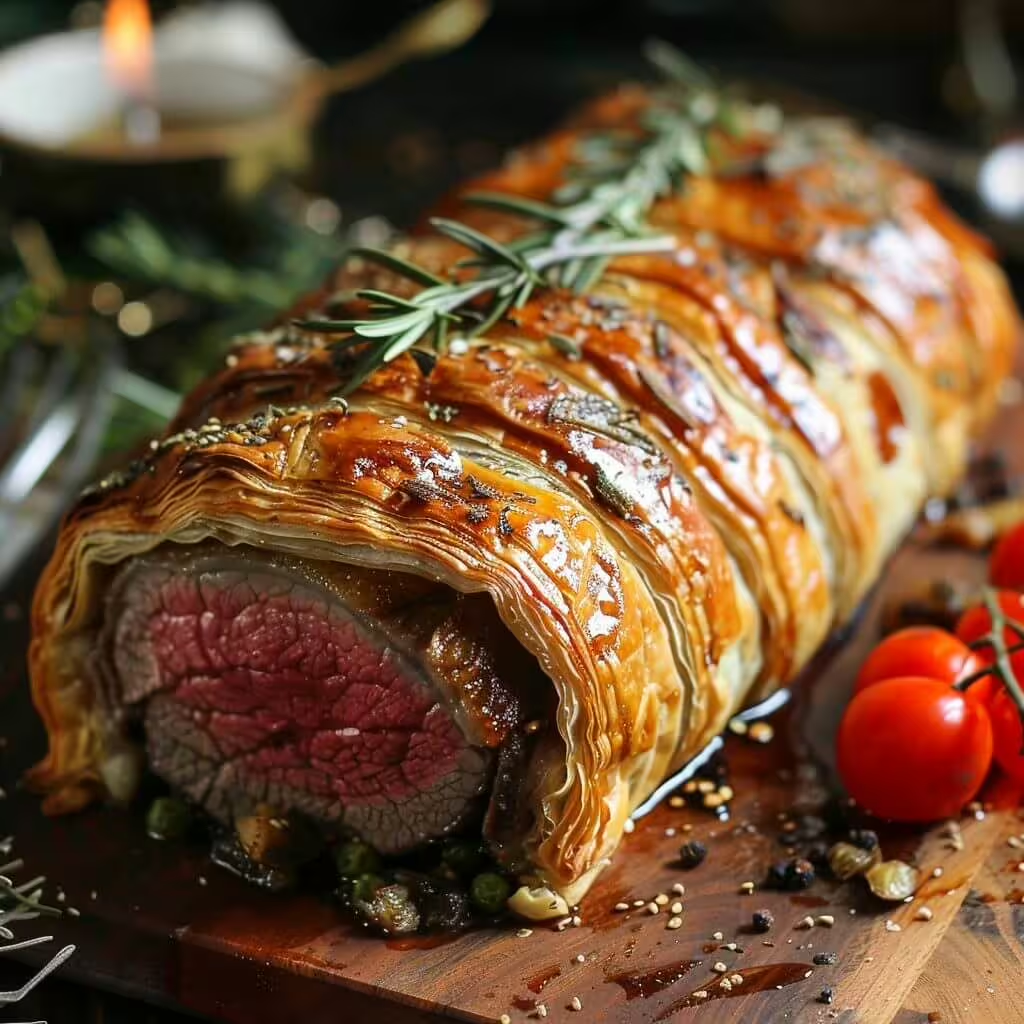
Beef Wellington is the showstopper of all showstoppers. Whether you’re celebrating a holiday, hosting a dinner party, or simply want to impress someone special, this dish never fails to deliver on both flavor and presentation.
At its heart, Beef Wellington is a luxurious cut of beef tenderloin, seared to lock in juices and wrapped in layers of flavor. The magic starts with a rich mushroom duxelles, finely chopped mushrooms cooked down with shallots, garlic, and herbs until they’re deeply savory and almost paste-like. This mixture is spread over a layer of prosciutto, which not only adds salty depth but also acts as a moisture barrier to keep the puff pastry crisp.
Then comes the wrapping. The tenderloin is coated in the mushroom-prosciutto layer and tucked into a sheet of buttery puff pastry. Once baked, the pastry turns golden and flaky, encasing the meat in a beautiful, delicious shell.
Timing and temperature are everything with Beef Wellington. The goal is a medium-rare center surrounded by perfectly cooked pastry. Using a meat thermometer is highly recommended for precision. Most people aim for an internal temperature of around 125–130°F (52–54°C) before resting, which will rise slightly as it sits.
Though Beef Wellington seems intimidating, it’s more about assembly than complexity. Each component can be prepared in advance: sear the beef, cook the mushroom duxelles, and even wrap everything before baking. This makes it much easier to execute when you’re ready to serve.
It pairs wonderfully with classic sides like roasted potatoes, sautéed green beans, or a bold red wine sauce. And of course, a glass of full-bodied red wine, such as Cabernet Sauvignon or Pinot Noir, rounds out the experience.
Beef Wellington is a celebration on a plate, rich, refined, and deeply satisfying. With a bit of planning and care, you can create a restaurant-worthy dish right in your kitchen that’s sure to impress every time.
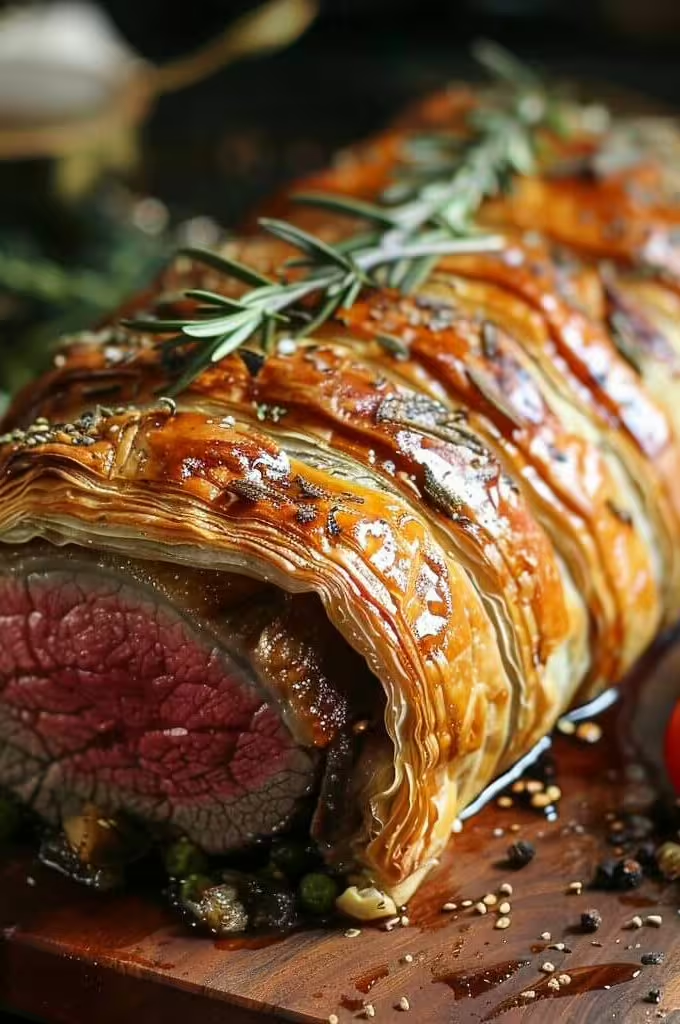
Ingredients
- 1.5 kg beef fillet
- Salt and pepper black pepper, to taste
- 1 tbsp olive oil
- 250 g pâté of your choice
- 500 g puff pastry
- 1 egg beaten
Instructions
- Preheat the oven to 200°C (400°F).
- Season the beef fillet with salt and pepper.
- Heat olive oil in a large frying pan and sear the beef fillet on all sides until browned.
- Remove the beef fillet from the pan and allow it to cool.
- Spread a layer of pâté evenly over the beef fillet.
- Roll out the puff pastry on a floured surface and place the beef fillet in the center.
- Wrap the beef fillet in the puff pastry, ensuring that the seams are sealed.
- Brush the puff pastry with beaten egg.
- Place the wrapped beef fillet onto a baking tray and bake in the preheated oven for 30-40 minutes, or until the pastry is golden brown and the beef is cooked to your liking.
- Remove from the oven and allow it to rest for a few minutes before serving.
- Slice and serve the Beef Wellington with your favorite sides.
This recipe is amazing! The beef came out perfect and the pastry was flaky! Definitely making this for the holidays.
I tried something similar but I didn’t seal the seams and it leaked everywhere. This warning is appreciated.
This took forever to make and my kids wouldn’t eat it. They said it looked weird. Not cooking this again.
3.5 stars maybe? I thought the prep would be harder but it was fine, though the recipe doesn’t say what temp the beef should be when it’s “cooked to your liking.” I’m not a mind reader, lol. Still good, just wish it had guidance.
Wow, I didn’t know making this dish was so easy! Never tried cooking beef before, and it turned out awesome!
Took me a bit longer than expected, but the results were worth it! Can’t believe I made a fancy dish like this!
5 stars! The instructions were easy to follow. Everyone thought I was a gourmet chef, haha!
Wow, that sounds amazing! I can’t believe how people can be so impressed with just following instructions. You really nailed it! 👏
Yum! I added mushrooms to the pâté and it was so good! Everyone loved it!
Yum. But why is it called Wellington? Is it from a place or something? 🤔
Beef fillet sear tip: don’t rush it. Mine browned better the second time when I dried the meat first. Great recipe!